Jerry Ball was wondering about what things were like in the years before he arrived at RHS. Well, I had arrived myself in the fall of 1960, so maybe there is a story here.
In the fall of 1960, I was a freshman at Dover High School in Dover, DE. I had gone to school there with the same group of students since second grade, when we had arrived there from Hickam AFB, HI in 1953. At that time, the base was in the early stages of being re-activated after having been closed after the Second World War. There was no base housing so my folks had bought a Levittown-like house between Dover and the base for us to live in. Every single one of the houses in the subdivision was laid out the same; the only difference was that half had the front door on the right, half on the left. My dad had been sent on a remote assignment to Dhahran, Saudi Arabia in 1959 and we stayed in Dover. When he got back with orders to transfer to Randolph, we packed up the family station wagon and hit the road. I had just finished my first six weeks in high school and was a totally sullen, rotten teenager who must have been the worst possible company in the long drive down to San Antonio.
When we got to Randolph, my dad found out that we could get base housing, but would have to wait a while. My folks looked around for a place and while searching, we stopped for lunch at the Old Bossy in Schertz. Me, being the rube that I was, looked at all the guys in there with their cool S-C letter jackets and wondered why so many University of Southern California students were in a small town in south Texas.
But my folks couldn't find a place and therefore rented a house in San Antonio, near the Austin Highway, while we waited for our base housing to be assigned. Since the house was in the Northeast Independent School District, my folks took me over to MacArthur High School to enroll me. But to my horror, a ninth grader in 1960-1961 was not a high school student and was instead enrolled in John Nance Garner Junior High. Garner was just one of the wings of what is now MacArthur High, but it was junior high! I had had to leave everyone I had known to come to Texas and was now being sent back in social standing to junior high. I was not a happy soul,
But when we moved onto the base later that fall, things got a whole lot better. The first thing that was better was our wheels. The base had contracted with a charter bus company (I think it was Kerrville Bus Co.) to take us kids downtown to school at Garner/Mac. And the buses that carried us were not the cheese buses that everyone else had to ride. Oh, no, we were special. We were delivered to school in silver, Greyhound-like buses. I might have been the only one who thought it, but I was pretty sure that I was cool.
It seemed when we arrived in the fall of 1960 that base leadership was willing to provide transport to a variety of schools. Some went to Schertz, some to Central Catholic, some to Alamo Heights, and some to Mac. I don’t think anyone went to Judson. But in those years, Judson was a tiny school. Randolph eventually was a small class AA high school, but Judson was a tiny class A high school. I suspect they didn’t have much to offer beyond very basic schooling. Schertz was a bigger AA school, Alamo Heights and Mac were AAAA sized schools.
I don’t know how the kids got to Schertz or to Alamo Heights, but suspect it was something similar. The problem with the bus from Mac was that if you wanted to stay for after school activities, your folks had to come into town to get you and that was a 15 mile trip. Mine were never wild about doing it.
We were all pretty pumped when RHS opened. Some of the kids who were going into their senior years decided to stay at Mac or Schertz or Alamo Heights, but those of us who were juniors were ready to go to the new school. Even if we had to leave our cool rides behind, the future looked bright and we really should have worn shades.
Thursday, July 23, 2015
Sunday, July 19, 2015
Coach Leschber responds to recent posts on early Rohawk history
Fellow Rohawks,
I am excited to be able to include the following e-mails from Coach Leschber. He saw the recent posts on early Rohawk history and sent me his perspectives on those beginning years at Randolph High School. I told him they were too good for me to keep just to myself so I asked if he would be willing to let them be posted on Gloria's Rohawk blog. He gave me his blessing. I think you will enjoy Coach's stories. I did.
Jerry Ball
RHS '65
In a message dated
7/5/2015 12:56:30 P.M. Central Daylight Time, ivanrleschber@yahoo.com
writes:
Jerry, thanks for all
the kind words you have written about your old basketball coach. I was blessed
with a good memory so I can recall a lot about the first four years of RHS. We
were able to enjoy lots of success in athletics, especially
basketball.
I first give credit to
the parents of the athletes and other students at RHS during those years. I
spend 42 years as an educator.
Educators are blessed to
have players-students who are intelligent, mature, and responsible. I learned
this my first day of practice and class.
I do not know if it was
destiny or something else that put us all at RHS at the same period of time.
Thanks to Mr. Claude Hearne, Superintendent I was the first coach hired. I had
the utmost respect for the gentleman. The high school was scheduled to open in
1961-62. Our first year was spent in the elementary school and nearby buildings.
The football team was allowed only to participate in JV football the first year
by the UIL. The team practiced at the base baseball diamond and played all games
away from home. One day Coach was walking to the baseball field and some players
gave me a ride in a VW bug. By the time we got to the diamond they gave rides to
other players. When we got there it took several minutes to
unload.
The basketball team was
allowed to play a complete district schedule as well as non-district
games.
We did not have a gym.
We practiced in the elementary school small cafeteria and played away from home.
We did get to play the last half of the district games at the base gym because
the high school gym was not completed at the time.
Coach was fortunate in
starting with a talented group of young men. As I recall we got Borellis,
Dodgion, and McDougall from one of the Northeast high schools. They were joined
by Wysong, Hartig, Bianchi, Flame and others.
We played in our first
tournament at South San Antonio High School. A basketball power who had
previously won several state championships. They put us in their bracket for our
first game. Instead of an easy victory, the young Ro-Hawks came very close to
winning the game. That game gave us the confidence to continue our winning
ways. A few weeks later we won the Burnet
Tournament.
That team went on to win
district, bi-district, and advanced to the regional tournament in Kingsville. We
lost a close game to a very experienced and mature team from the Houston
area.
My wife told me e-mails
need to be short so I will definitely write more later. Since she
taught "Career and Technology" I believe her.
One last story.
Principal was very open concerning his hatred of the game of basketball. Coach
Mickler was not much of a fan either. The athletes had a nickname for Mr. Hall
because of his body language when he watched sports. They will have to tell you
what it was. After numerous basketball victories we got a "victory flag" which
was to be flown the day after the victory.
When Mr. Hall refused to
fly it, John H.’s mom was in the outer office waiting to see him. Mr. Hall drank
at least 10 or more cups every morning. He could not get to the coffee pot in
the lounge without being seen by John's mom. I felt sorry for him one morning
and brought him a cup. He kind of liked the old basketball coach
then.
More
later
In a message dated
7/13/2015 7:17:01 P.M. Central Daylight Time, ivanrleschber@yahoo.com
writes:
The team you played on
had an interesting history. The season looked very promising before the first
game. We had several starters returning from perhaps one of the strongest teams
the year before. The J.V. team that I also coached finished undefeated with an
18-0 season record. We had some very good players including a transfer by the name of
"Bradewater." He had a great stroke from the corner baseline. He would have loved
the 3 point shot.
The UIL allowed the BB
teams to start practice in mid-October during the last few weeks of football.
John Hartig broke his foot/ankle playing football at the time. He was a
starter. We were very fortunate in having Bill Kem and you join the
team.
During the Christmas
Holiday's tournament we lost Floyd Harvey who was also in the starting lineup.
He had a lung that collapsed while sitting on the bench. His dad recognized he
was in trouble and took him to RAFB clinic and later to
Wilford-Hall Hospital.
Needless to say I was
very concerned that the rest of the season was going to be quite a challenge. We
also lost Bradewater who transferred to New Braunfels High
School.
We circled the wagons
and got to work. I spent a lot of practice time working with you and Bob White.
We did some competitive rebounding on a side basket that I placed a small ring
inside the rim just barely enough to allow a soft shot to go through.
I depended on our
veteran guard who was like a coach on the court. I really did not know how much
I depended on Tom McDougall until he graduated. Bill Kem came in and filled one
of the guard spots. Charles Pitzer worked hard and filled a vital
role.
Old coach got you into
the saddle and the rest was history. The team you were on had no 'I' ON
IT.
The following are a
couple of stories some of your RHS friends might enjoy. Unfortunately some were
at my expense.
Mr. Marvin Porter, math
teacher was an interesting guy. He was a bachelor who lived with his sister and
helped raise nephews and nieces. He was a heavy smoker. He had a fairly new car
and never changed the oil - washed it, just added
oil.
He purchased his
cigarettes from a drive-through window. He would toss the old
pack, which still had one or two, into the back seat along with the
change.
He decided to sell the
car. So he had some of his students clean out the inside. They found over $20 in
change and enough cigarettes that were more than a carton. Needless to say he
did not get much money for the car.
I used the library a lot
for my world history classes. The librarian was a great help. She read every new
book she purchased for the library during the summer months while her teacher
husband worked for the National Forest Service.
The side door was across
the hall from the cafeteria entrance. Down the hall one of the teachers would
allow his/her students to leave a few seconds prior to the lunch bell. I was
standing next to the door with my hand on the door knob. When the bell rang I
quickly opened the door to let my students out when the bell rang. A young male
student ran into the door and almost knocked himself
out.
The other incident that
was quite embarrassing to me occurred while supervising a junior class. The
classroom was the homeroom of a teacher by the name of Charlotte Woods. A very
attractive young blonde. I had trouble keeping a pen or pencil. I
was looked for one in her desk, but did not find one. Next to the desk was a two-drawer filing cabinet. I was talking to my self and said "I wonder if Miss Woods
minds if I get into her drawers?" The male clowns on the front row
started laughing and the rest of the class started in. I had no clue what they
were laughing at until one of the students told me.
I had to leave the
classroom. Every time I returned they laughed harder. I went over and told the
principal what happened. He told me to return, but stand in the hallway next to
the door.
One of the things I
remember about the young ladies at RHS. They were attractive with very little
makeup. I was very surprised when I attended the Junior/Senior Prom. I did not
recognize half the girls there. I was shocked when many of them were in my
classes. I had to ask one of the female teachers to identify most of
them. With the beautiful dresses and makeup they seemed more like
21 instead of 17.
I will try to write more
later. Take Care!
In a message dated
7/15/2015 11:59:43 A.M. Central Daylight Time, ivanrleschber@yahoo.com
writes:
One year during the
Christmas Holidays we were practicing getting ready for the district race. We
were the only people on the campus at the time. We were competing on dribbling
the ball the length of the court in teams. A player had to maintain a legal
dribble the length of the court, touch the wall with one hand. Then return and
hand off to a teammate. One player who touched the wall hands came
down over the fire alarm. It broke the glass so we could not get it to stop. I
went outside due to the noise and the team joined me. I was also concerned that
it might have gone to the base fire department.
Sure enough, down the
perimeter road came a truck loaded with young A. P.'s followed by a fire truck.
We waved our hands to try to let them know it was a false alarm. The truck ran
over the curb and almost turned over. The fire truck struck the grass area curb
before coming to a stop. We had a tough time to keep from laughing. It must have been their first experience answering a fire alarm. I recall the students singing
a little tune teasing the young A. P.’s. "I wish I had a low IQ so I could be an
AP too. . .”
When you guys won the
regional tournament and advanced to state, my plans for the trip to Austin were
changed by Coach Mickler. I always believed players could better prepare for a
big game by sleeping in their own bed the night before. It cuts out all the
distractions sleeping away presents. Coach M took it upon himself and made
arrangements for us to stay at the S. F. Hotel in downtown Austin. (We stayed in
a outskirts hotel when I was in high school playing in the regional tournament.
It was isolated so we spent the time sleeping and playing cards.)
I was highly
disappointed to say the least. During those days we could have traveled to Austin
in 90 minutes or less and slept in our own beds. I later learned that some of the
players left the hotel either the night before the first game or the 3rd place
game the next day. I blame myself for not going to Mr. Hearne and seeing if we
could commute to Austin instead of staying in a hotel. I did not want to make
wave in the athletic department so I kept my mouth shut. I did tell Coach M that
I believed it was a poor decision on his part.
KEEP UP THE GOOD WORK ON RHS
HISTORY.
Friday, July 10, 2015
Jerry Ball on “The Girl” (AKA “Prelude to No Kiss”)
One of my e-mail correspondents has noted that the overview
of my post on arriving at RHS mentioned three topics at the top of my memories
of Randolph - basketball, mentors, and “The Girl” – but I only followed up with
details on basketball and mentors. I
never returned to the topic of “The Girl”.
Okay. Sigh. I’ll go there. In doing so, I will disregard the wisdom from
Thales of Miletus: “A multitude of words
is no proof of a prudent mind”.
It may be a coincidence that that song has been hardwired on every Walkman or iPod I have own since.
Let me reset the stage.
We’re “brats” so we’ve all been there. The first day in a new school. When you walk into a new school on or near an
Air Force base, do you remember how you would keep your eyes open in hopes of
running into somebody you had known at a previous base. I had my eyes peeled all over the place but,
alas, not a single familiar face.
I did see one girl that I would like to have had become a
familiar face to me. I glanced around
the room, saw her, and it was as if my mental MP3 player had clicked onto the
soundtrack of “South Pacific”:
Some
enchanted evening
You may see a stranger,
you may see a stranger
Across a crowded room
And somehow you know,
You know even then
That somewhere you'll see her
Again and again.
https://www.youtube.com/watch?v=_qJjkbXGj1s
And, of course, in a school as small as ours, I did see her
“again and again”. I even tried to
engineer opportunities to be close enough to talk to her. But if you remember me at all, you will
recall that I was not especially skilled in social graces. Especially with
her. Whenever I was near her, I was
pretty much unable to talk.
Once I had the wonderful idea of visiting her at her house
in the expectation that a less-public environment might be more conducive to
conversation. As I walked there, my
heart channeled my inner Freddy Eynsford-Hill from “My Fair Lady”:
I
have often walked
Down
the street before,
But
the pavement always
Stayed
beneath my feet before.
All
at once am I
Several
stories high,
Knowing
I'm on the street where you live.
https://www.youtube.com/watch?v=TwhUipIX_oA
While my heart may have been confident when I started my
mission, my brain channeled a teetotaling Raj Koothrappali while there. “On the Street Where You Live” morphed into
“The Sound of Silence”. I am sure that
after my short visit, she wondered, “What the heck was that all about?”
And my “walking home” music on my inner iPod foreshadowed a future
Simon & Garfunkel hit:
I
have my books
And my poetry to protect me;
I am shielded in my armor,
Hiding in my room, safe within my womb.
I touch no one and no one touches me.
I am a rock,
I am an island.
And a rock feels no pain;
And an island never cries.
It may be a coincidence that that song has been hardwired on every Walkman or iPod I have own since.
And so it went for the remainder of the school year. A perfect game. No runs, no hits, no errors. Hence the subtitle on this post – “Prelude to
No Kiss”.
Despite the “no contact” situation, “The Girl” still
remained in my mind – surprisingly so.
But to bridge to the next “The Girl” segment requires that I provide a
little background information.
In the spring of my senior year, I received a scholarship
offer from the National Merit Scholar competition. I also earned an appointment to the United
States Air Force Academy. Had I taken
the Merit Scholarship money, I had planned to study political science at a
major university. But, at Randolph,
where it seemed like half of the senior boys applied to go to the Air Force
Academy, to turn down the appointment would have been like Moses trying to give
God back the Ten Commandment tablets. My
going to USAFA also freed up money to help my parents pay for my sister Janet
(RHS ’67) to go to college.
I don't know that the Air Force Academy was the best college
match for me, but I made it through.
The first year at a service academy is deliberately
tough. (Or it was at that time.) We had to double-time (run) everywhere we
went. We could not take a straight line
route from place to place, but had to run on the grid of marble strips that
covered the terrazzo (a large paved area that connected the buildings of the
cadet complex). When we got to an
intersection of the marble strips, we had to slow to a walk to make a square
turn before resuming double-time. At
meals, we had to spout rote information from a book of quotations any time an
upper classman told us to - thus leaving less time to eat. We could not go out of the immediate area of
the cadet dorms and academic buildings without a special permit to do so. We could not wear civilian clothes. We collected laundry bags to go to the
laundry and delivered them back to the rooms when they returned from being
cleaned. Meanwhile, we carried at least 18
semester hours of coursework including calculus, chemistry, physiology,
etc. It pretty much sucked from the 28th
of June of 1965 to the second week of May of 1966 when we were put through
"Hell Week" - the final phase of abuse before being
"recognized" as worthy to be cadets.
I had been warned about the "doolie" year, but nothing could
have prepared me for it.
During the summer of 1965, we had lots of physical
conditioning and endless rounds of military training. (Some of the military training films would
have been interesting had I not been so hungry.
I remember watching a film on the Army Air Forces in WWII. The film showed B-17s bombing a tire factory
in Germany, but I swear that my hungry mind saw pretzel sticks being dropped on
chocolate covered doughnuts.)
Okay. Now back to
“The Girl”.
On one afternoon, we were doing the classic calisthenics. One member of the class of 1966 was calling
out the cadences while his classmate, mounted on a raised platform,
demonstrated the exercise as we did it. It
would have looked something like this:
The '66er who was demonstrating the exercises later on
became the first cadet to "max" the cadet physical fitness test - a
perfect five hundred point score - so you get an idea of the kind of condition
he was in. His name was Thomas S.
Brandon - and he was built like a Greek god portrayed in a fine art torso
statue.
After the conditioning exercises, we started on our
afternoon run. Cadet Brandon was leading
our group (called a "flight") of about 45 cadets and he had run about
a football field length when he called the flight to a halt because his shoe
lace had come loose and he needed to tie it.
One of my classmates chose to make the comment, "What's the matter,
Sir? Can't you take it?" That was an error.
As Cadet Brandon stood up from tying his shoe, he turned and looked at our group with his piercing blue eyes, and every one of us knew that this was not going to be good for us. So we ran. We ran up hills and down hills. Where he spotted muddy places, we ran through them so that we could add the weight of that muck and mire to our sweat. Other flights finished and headed for the showers. We continued to run. I looked for some kind of mental diversion to allow me to avoid the aching of my joints and the tearing of my lungs in the thin Colorado air. So, my mind went back to “The Girl” who first caught my attention in the opening days at Randolph High School. I envisioned her and me riding in a two-seat convertible sports car through the Italian Alps. Of course, at that time I had never been to the Italian Alps, but I figured the Italian Alps looked a lot like Bavarian Alps and I had been there. So as my body struggled over real rises and falls in the Rockies, my mind drove through fantasy ones on Alpine mountain roads with the pretty girl who had never ridden in any kind of car with me and who was blissfully unaware of any attraction that I had to her.
The ruse worked for me.
Eventually, Cadet Brandon knew that he had to turn us loose so that we
could shower and get to our next formation.
He halted the flight - and I returned to North America from my mental
sojourn in Europe. I was one of seven
cadets still remaining in the group. I
had made it.
And that is why the Italian Alps became one of three places
on my “Bucket List”. Unless we receive
comments or requests to go in a different direction on the blog, my next post
will talk about bucket lists and I’ll ask you to tell me if you have one. If you do, I’d like to know what places are
on it and how many of them have you visited.
So, I’m going to sign off on this bittersweet set of
memories and hope for comments from you.
Jerry
Tuesday, July 07, 2015
John Lieberman on "Soon-to-be 'Golden' RHS-66 Grads"
I don’t know
if any of you have given much thought to this, but June 1st of next
year (2016) will mark the 50th anniversary of our graduation – June
1st, 1966. What a great
opportunity to plan some sort of 50th reunion for our graduating
class.
Granted, June
1st falls on a Wednesday next year but what about the weekends of
May 28/29 or June 4/5? It wouldn’t have
to be anything elaborate – maybe nothing more than dinner and drinks at the
Barn Door or the Magic Time Machine or some other place that we used to visit
for special events during our days at RHS.
But it could also be as elaborate as we want to make it.
I realize
that I’m in Shreveport, LA, and that makes it a little bit more difficult for
me to try to plan something on my own.
BUT – I’m going to be home in San Antonio the first week in August, to
look after my 92-year-old mother while my sister takes a much-needed vacation
in Colorado, and I’m sure that I could break away from the house for a couple
of hours to meet with anybody who might be interested in trying to put
something together.
If you’re
interested, drop me an email at jlieberman37@comcast.net
and let’s see what kind of plan we can come up with. Even if you can’t get together with me during
that week, drop me a line if you’ve got some ideas about what we could and
should do.
It would be a
shame to let this “golden” opportunity go to waste.
John
Lieberman
RHS-66
Saturday, July 04, 2015
Happy Independence Day, Ro-Hawks!
Happy Independence Day to Ro-Hawks of all years!
After my dad retired from full-time employment and moved from Dallas back to the San Antonio area, he used to fly an American flag on the front of his house every day. I worked at Randolph Air Force Base then - not far from where Dad and Mom lived - and stopped by regularly to see them even if I only was there for a minute to give them a hug. If I noticed Dad's flag was getting a little threadbare, I would bring him a new one, which always brought a grin to his face no matter how much he would protest that he could buy his own flag.
I bought the last flag not too long before we lost Dad in February of 2010. My mother is deaf and went to live with my widowed sister Janet (RHS '67) as soon as Dad was gone. I stopped by their now-abandoned house and brought the flag home with me.
Today, as with all Federal holidays, I got up this morning and flew the flag on the front of my house. Unlike Dad, I only put the flag up on holidays. As I walk out and unfurl it, I think of Dad and his generation of military people. I think of veterans of our generation who saw few accolades for wearing "the Nation's Cloth". And I think a lot about today's soldiers, sailors, Marines, and airmen who face an implacable foe in far-flung places while becoming an ever-diminishing proportion of the population with first hand experience in the military. May God bless and protect these families.
But, on Independence Day, I think most of what the holiday used to mean - a shared pride of country that united, if but for a day, people of differing political and other passions. I fear that sense of unity is forever gone. And that is a loss to America and Americans.
So, tonight, after having watched the magnificent fireworks televised from the Nation's Capital and now hearing the booms of outlawed fireworks sounding throughout my neighborhood, I think back in satisfaction on delightful days of Independence Days past. Of grilled steaks with the family in locations all over the world. Of sitting with a half million other spectators to watch fireworks over the Washington Monument. These and many other memories allow me to mean the anonymous quotation at the foot of my memo pad - "If tomorrow starts without me; thanks to God for a wonderful life!"
Happy Independence Day to the friends of my youth! I hope it was a good one for you.
Jerry Ball
Wednesday, July 01, 2015
Thoughts about living on an island
A while back I was looking for something and discovered something else. In a photo taken in front of our house on H Street West on Randolph in 1966, I noticed something interesting in the background. It seems to be Steve Burgoon and someone else (I think it's Mike Hunt, but can't be sure) walking from the bowling alley to Steve's car parked at the curb. Seeing the car led me to ponder something else.
It seems, looking back, that we who lived on Randolph lived on an island of sorts. I was talking with a colleague and when asked about where I had gone to school, I said I had gone to a public school. While technically correct, Randolph High was really more like a private school in those days.
Really. Think about it.
We all lived on the base, we were all military dependents, we had armed guards protecting us, we had sports facilities at our disposal, we had recreation facilities at our disposal, we had free medical care, we had it all. One would have thought we were living in some sort of taxpayer-funded paradise. Of course there was always a cost to be paid (my dad disappeared in the middle of the night in the fall of 1962 and we didn't know where he had gone for six weeks or so, until he got back from wherever he had been sent during the 1962 Cuban Missile Crisis; then again in 1967 when he was in Vietnam and missed David's senior year and all that happened in that year 1967-1968). Oh, yes, there was a cost to be paid.
But, honestly said, we had it good. And Steve's car is one of the good things. It is a Renault 4CV. It had an engine in the back, suicide doors up front, and barely room for four young hooligans. I'll just bet that there were very few folks in south Texas in those years driving Renault 4CVs, unless they were service connected. Because those who'd had the opportunity to live overseas had also the opportunity to discover oddball automobiles and to maybe bring them home. I don't know where Steve's folks got that 4CV, but no one else I knew had one like it.
Ponder this photo out of the 1963 Talon yearbook.
We were on an island. I often use automobile design examples in my classes and the students have no idea what I am talking about. Even had they been alive a half century ago, their home towns were not as interesting in terms of automobiles. Doris Maese's folks had an Isetta. I could not find a photo of Doris' Isetta, but the image is burned in my mind. She let me try to drive it once and it was scary having the world right at the end of one's feet. No one knows that the Isetta was one of the cars that kept BMW going in the 1950s. There are lots of BMWs around nowadays, but an Isetta is rare. Except for us on our island.
Neely Little, whose family moved from Randolph between her junior and senior years had a Jaguar XK140. I think I remember that her grandmother had given it to her. Note I said "to her". In my memory, it was Neely's car. Boy, I would have really liked to have been able to drive that one around, but if I was afraid of the Isetta, I was really afraid of the power in that Jag. But where else was I ever going to see a Jag like that, let alone sit in it and dream.
In our sophomore years at MacArthur, Gary Erickson and I had just gotten our driver's licences, but our folks were too cautious to let us go tooling around in the family car. However, Gary knew an airman who worked at the auto hobby shop and if we would wash and polish his car, he'd let us drive it around. Nobody now remembers the Studebaker Silver Hawk, but for a couple of 15 year olds, this was a dream. We probably felt a whole lot cooler than we really were, but it was fun.
It seems, looking back, that we who lived on Randolph lived on an island of sorts. I was talking with a colleague and when asked about where I had gone to school, I said I had gone to a public school. While technically correct, Randolph High was really more like a private school in those days.
Really. Think about it.
We all lived on the base, we were all military dependents, we had armed guards protecting us, we had sports facilities at our disposal, we had recreation facilities at our disposal, we had free medical care, we had it all. One would have thought we were living in some sort of taxpayer-funded paradise. Of course there was always a cost to be paid (my dad disappeared in the middle of the night in the fall of 1962 and we didn't know where he had gone for six weeks or so, until he got back from wherever he had been sent during the 1962 Cuban Missile Crisis; then again in 1967 when he was in Vietnam and missed David's senior year and all that happened in that year 1967-1968). Oh, yes, there was a cost to be paid.
But, honestly said, we had it good. And Steve's car is one of the good things. It is a Renault 4CV. It had an engine in the back, suicide doors up front, and barely room for four young hooligans. I'll just bet that there were very few folks in south Texas in those years driving Renault 4CVs, unless they were service connected. Because those who'd had the opportunity to live overseas had also the opportunity to discover oddball automobiles and to maybe bring them home. I don't know where Steve's folks got that 4CV, but no one else I knew had one like it.
Ponder this photo out of the 1963 Talon yearbook.
We see (from the right) Dennis Ruefer and Cornel Walker near what appears to be a late 50s-early 60s Oldsmobile. But in the foreground, we see Buzz Mulkins and Gary Bird in Gary's Mercedes 190 convertible. What other kids in South Texas were cruising, even to the drive-in in Universal City, in such a ride? And I'll bet that Gary just figured it was only the family car. No big deal.
We were on an island. I often use automobile design examples in my classes and the students have no idea what I am talking about. Even had they been alive a half century ago, their home towns were not as interesting in terms of automobiles. Doris Maese's folks had an Isetta. I could not find a photo of Doris' Isetta, but the image is burned in my mind. She let me try to drive it once and it was scary having the world right at the end of one's feet. No one knows that the Isetta was one of the cars that kept BMW going in the 1950s. There are lots of BMWs around nowadays, but an Isetta is rare. Except for us on our island.
For us, it was the car Doris Maese drove to school.
No, none of my millennial students have a clue what it was like to grow up on an air base in south Texas in the 1960s. We weren't special, but the place that we lived was and we learned things from the atmosphere around us.
Neely Little, whose family moved from Randolph between her junior and senior years had a Jaguar XK140. I think I remember that her grandmother had given it to her. Note I said "to her". In my memory, it was Neely's car. Boy, I would have really liked to have been able to drive that one around, but if I was afraid of the Isetta, I was really afraid of the power in that Jag. But where else was I ever going to see a Jag like that, let alone sit in it and dream.
In our sophomore years at MacArthur, Gary Erickson and I had just gotten our driver's licences, but our folks were too cautious to let us go tooling around in the family car. However, Gary knew an airman who worked at the auto hobby shop and if we would wash and polish his car, he'd let us drive it around. Nobody now remembers the Studebaker Silver Hawk, but for a couple of 15 year olds, this was a dream. We probably felt a whole lot cooler than we really were, but it was fun.
And this wander down automobile memory lane began when I noticed Steve Burgoon's truly classic Renault 4CV in the background of a photo. Life on the base was always interesting and we had the opportunity to see lots of stuff and learn about many things that life in another locale might not have afforded. I feel really blessed.
However, reality is always intruding. Yes, our island was full of interesting automobiles, and yes, some of us were able to tool around on Vespa and Lambretta motor scooters (early 1960s hipsters, though we had no idea that we were such style setters, then or now). But when it came to actually being able to drive, I, at least, had to use the family car. And the family car was a 1956 Chevrolet 210 station wagon with a six cylinder engine, a two speed PowerGlide, and no radio.
"Mom, Dad, You're ruining my life. This is so uncool."
Tuesday, June 30, 2015
From Jerry Ball, RHS '65 - Round Two
They are not long, the days of wine and roses,
Out of a misty dream
Our path emerges for a while, then closes
Within a dream.
Out of a misty dream
Our path emerges for a while, then closes
Within a dream.
-
Ernest Dowson
Well, I had hoped for a few more responses to my blog entry in
May. (Thank you, Gloria!) Let me try again.
One of the things, I was hoping to hear about were your
experiences at RHS. I’ll start by telling you some of mine. Basically there are
three parts – basketball, mentors, and “The Girl”.
Some of you may remember the flurry of e-mails that came about
when Jim Pepitone, RHS ’65, forwarded a note about a movie called “Brats” to
Gloria to include on the blog. Jim’s note seemed to hit a responsive note with
a bunch of us as the next few days brought comments (and memories) from people
I had not heard from for many years. Great comments. I loved them. (You can
still find them on the blog if you go to December 2005 and scroll down to
them.) The comments I’m making today are in addition to the ones I made then
thanking a number of Rohawks for welcoming me in August 1964.
- - - - -
I was only a one year Rohawk, but I remember many things about
that year. I remember playing basketball. I remember faculty members who helped
me a lot. And I remember someone whom I will call merely “The Girl”.
I came to Randolph after having spent my first three years of high
school at a dependent school near Seville, Spain (Morón Air Base and San Pablo
Air Base, for those familiar with the old base structure there). Moving between
junior and senior years really sucked. Things I thought I might have been
elected to had I been able to stay in Seville (maybe student council president,
NHS president, or yearbook editor, for example) were not even a possibility
when I walked into a new school where absolutely nobody knew me. And Texas state
law kept me from competing to be the valedictorian. I didn’t expect much out of
my one year in this new school.
When I was processing in to RHS, they asked a lot of questions.
One of the questions was had I ever played any sports. I said I had played some
basketball. When my class schedule came out, I didn't think anything about
having been assigned to PE for the final class period of the day - except to be
glad to know that I wouldn't have to go to my next class sweating like a pig
like I had had to do for three years in Spain.
But it turned out to be more important to me than that. It was in
that class that I met the first of the mentors at Randolph who have had a
lifetime impact on me – Coach Ivan Leschber. In Spain, I had had two coaches.
One was primarily a chemistry instructor. The other was primarily a tennis
instructor. Coach Leschber was the first time that I knew a man who was a real
basketball coach as a primary part of his being. On the other hand, I’m pretty
sure I was not the first time that he had a real “work in progress” to deal
with.
I found out that the boys assigned to last period PE were guys who
made up the sports teams for the school since it made it easy to transition
directly from the class day to practice time. Texas University Interscholastic
League rules forbade any basketball practices from happening prior to October
15th, but they didn't stop us from playing volleyball as a group until then. I
watched as some of the guys in my PE class started disappearing from the group.
When October 15th came, we started doing all of the traditional basketball
drills while we waited for the football team to finish its season, and then we
got the multi-sport guys to join us for basketball.
Coach Leschber was always looking for an edge, so he had us compete
for the task of doing the tipoff at the start of each quarter. We had a “jump
off” and I won. That meant that I got to start each game - and then Coach would
get me off the court as soon as there was a break in the action and a real
basketball player could get in. But Coach kept working with me one-on-one and,
as the season went on, I got to stay on the floor longer after the tipoff.
In his great memoir “My Losing Season”, Pat Conroy began with the
line “I was born to be a point guard, but not a very good one”. I can identify with that. My genetics made me tall so I was born to be
a basketball player, just not a very good one.
Those of you who watched the ’64-’65 basketball games know that. But I
was on the starting team with some really good players – Tom McDougall, Bill
Kem, Charles “Mike” Pitzer, and George McClughan, and we had guys like “Flame”
Madsen on the bench who could have started on most of the other teams in our
district. That helped atone for my
manifold deficiencies.
Coach Leschber’s teams had won the district championship the first
two years that RHS operated. As we started the pre-season for this third year,
it looked like his winning streak would end with us. Coach put us up against
some talented and physically aggressive teams. I think that when I jumped the
tipoff against the center for LaSalle High School, I looked up for the ball and
read “Converse, size 14” on the bottom of his sneakers. Our non-conference
record was not good. I guess we were being toughened up for the real season.
Part of the “toughening up” was the alumni game played over
Christmas break.
I had heard the names of the guys who starred in previous years – most
notably Bill Borellis, a Parade All-American. The guys talked about his playing
with respect bordering on awe. The girls talked about him with a near swoon.
So, it came to pass that it was my turn to guard him in the alumni
game. It was no challenge – for him. I frequently took my defensive stance only
soon to be looking at empty space between me and the far wall of the gym. I
never even slowed him down. I know this
for a fact because I “met” Mr. Borellis years later at an alumni event, and he
had no hint of acknowledgment of ever having seen me before. If I had slowed him down at least once, he
might have at least recognized my face.
Coach worked one-on-one with me a lot during the Christmas break
as we would soon start district play. Among the student body, I suspect there
was little enthusiasm (or hope, I expect) as that fateful date approached.
In 2010, I read a book that contained gems that any of us who have
had an outstanding coach can identify with. The title was simply Coach:
Lessons on the Game of Life and it was by Michael Lewis. I had heard an
excerpt on the radio while driving and picked up the book as soon as I could.
Mr. Lewis said things about his coach that many of us might have felt but could
not say as well. In particular, Mr. Lewis described a time when his team
started a year poorly, but then responded to the leadership of his “Coach
Fitz”.
“.
. . The games became closer; the battles more fiercely fought. We were learning
what it felt like to lay it all on the line. Those were no longer hollow words,
they were a deep feeling. And finally, somehow, we won. No one who walked into
our locker room as we danced around and hurled our uniforms into the washing
machine, and listened to the speech Fitz gave about our fighting spirit, would
have known they were looking at a team that now stood 1-12.
We listened to the man because he had something to tell us, and us
alone. Not how to play baseball, though he did that better than anyone. Not how
to win, though winning was wonderful. Not even how to sacrifice. He was
teaching us something far more important; how to cope with the two greatest
enemies of a well-lived life, fear and failure. To make the lesson stick, he
made sure we encountered enough of both. What he knew – and I’m not sure he ever
consciously thought it, but he knew it all the same – was that we’d never
conquer the weakness within ourselves. We’d never drive the worst of ourselves
away for good. We’d never win. The only glory to be had would be in the quality
of the struggle.
I never could have explained at the time what he had done for me,
but I felt it in my bones all the same.”
The other members of the Rohawk basketball team no doubt had many
more coaches in their various athletic programs than I did. For me, when I hear
“Coach”, I think of Ivan Leschber. Thanks, Coach.
After Coach Leschber’s hard work with us in the pre-season, there
was a surprise. We won our district championship, the bi-district championship,
and the regional championship before losing to a superior team in the Texas
state semi-finals.
Of those games, the final game of the district season sticks out
most in my mind. We had been undefeated through the district and were playing
New Braunfels Canyon High School whose only loss had been to us on our court.
Now we were playing on theirs.
The lead went back and forth. Never varying much more than a few
points. We tied at the end of regulation. And for two overtime periods. As the
seconds closed in the third overtime, Canyon’s star player drove for the basket
while being guarded by our star Tom McDougall. I can still see the play as
though I am watching a slow-motion film. Their star quickly threw up his arms
in a shot that was less intended to go in as to get a foul on Tom and earn two
free throws. Tom sensed this, pulled his arms back, and the ball flew over the
basket where I speared it on the other side and quickly threw the outlet pass down
the court. My original recollection was
that Mike Pitzer caught the ball and took the shot, but he told me that Coach
called time out and set up a play for Tom to take the final shot. Tom was
guarded well and tossed it to Mike who did get the winning shot. Our district
record was preserved and we went on from there.

A few years ago, Mike Pitzer sent me a DVD with clips from some of the games from 1964-1965. I had gone back to the school around 1970 and asked about whether there were any game films left only to be told they were all gone. I figured there was no chance of ever seeing any scenes from that season again. And then the envelope came from Mike.
Pat Conroy had a similar experience and he described it “My Losing
Season”:
"In the grainy film of a handheld camera, the year suddenly
materialized as my team, so beautiful in their prime, were seen running up and
down the court. " I . . . “watched the . . . film mesmerized by the
strange magic of image and lost time."
And then, . . . "The
Zapruder film of our lost youth went black, and we turned back to our
middle-age selves again."
I watched the DVD several times the day it came. No sound.
Just grainy gray images of long ago days. But they were wonderful to watch, and I
really am glad Mike shared them.
Besides Coach Leschber, I had other teachers at RHS who still
stand out in my mind. Mr. Cranz L. Nichols taught physics. It may have been the
toughest course I took in high school
(besides typing, but for very different reasons). In college, I would
realize why the course had been so tough. Mr. Nichols had to explain concepts
that were best spoken in the “language” of calculus. In my sophomore year of
college, with thirteen semester hours of calculus under my belt, the physics
concepts Mr. Nichols had so carefully imparted were matched by the math they
should relate to. Mr. Nichols gave me a head start on not only college physics,
but required courses in aeronautical engineering, astronautical engineering,
and mechanical engineering. Thanks, Mr. Nichols.
One other teacher I’d like to mention even though he is no longer
with us physically. Mr. William Walter Childers taught “Civics” – the processes
of government and of our individual participation in it. But beyond teaching an
academic subject, he cared about students. Again, Michael Lewis’ words are
better than mine:
“A few people, and a few experiences, simply refuse to be
trivialized by time. There are teachers with a rare ability to enter a child’s
mind; it’s as if their ability to get there at all gives them the right to stay
forever. I’d once had such a teacher.”
Mr. Childers was a good teacher because he was knowledgeable in
his subject matter. He was a great teacher because he authentically cared for
his students as individuals. I can see him now – standing behind his classroom
podium with his motto inscribed – We CAN do it if we TRY! He once gave me a
photograph of Lenin’s Tomb that he told me had been taken with a camera
concealed in his belt buckle. But beyond that souvenir, he gave me much
encouragement and considerable counsel – not all of which I heeded, but it
would probably have worked out better for me if I had.
Somebody in Mr. Childers’ family has put some nice pictures and
information about his life on Ancestry.com if you have access to that. You can
use Ancestry.com for free at many public libraries.
When I go to Fort Sam Houston National Cemetery to visit my dad’s
grave, I sometimes stop by Mr. Childers grave, also. I salute, and I say a
prayer of thanks for having known him. I wish every student could have a
teacher like him. Thanks, Mr. C.
So, that’s my start of the conversation. I’d love to see notes on your recollections
from RHS, or from any of the decades thereafter. Any takers?
Thanks.
Jerry Ball, RHS ‘65
Monday, June 29, 2015
Picture from 1965 State Tournament - Ro-Hawk in a Bind
This is the picture I mentioned in my comment below on playing in Gregory Gym at UT. The picture appeared in the San Antonio Express on Friday, 5 March 1965 - page 1D. It definitely did not help me feel better about our loss!
Sunday, June 28, 2015
Following Jerry Ball's lead ...
Jerry suggested that it would be interesting to hear from others about their experiences and he did a great job of discussing what it was like arriving for his senior year.
I was one of the original students at RHS in 1962. I had been a sophomore at MacArthur HS in San Antonio and was looking forward to the new experience of a new school. It was actually kind of keen to have had to start in the wooden structures near the chapel because it allowed us to really appreciate the new facility out on the west perimeter road when it opened in the spring of 1963.
Starting in the new school was a real treat because it was like starting with a clean slate. Oh, sure, you had a sort of reputation in your old school and you knew folks who had been there with you, but in the new RHS, everyone was sort of starting anew and there were no limitations.
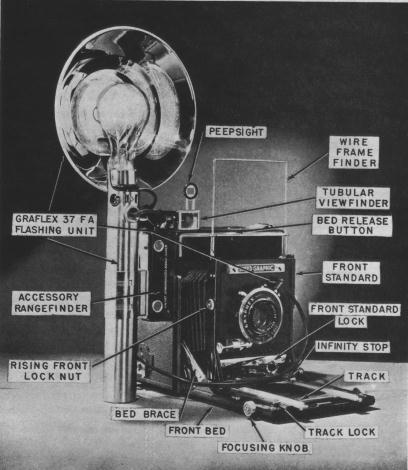
With no history to guide us, everyone was urged to try to do everything. One of the things I signed up for (for no particular reason) was the yearbook staff. I had no experience that would qualify me for it, but it seemed interesting enough. One of the first things that happened was that someone had to be selected as the yearbook photographer. Somehow, in the setting up of the school, equipment had been purchased and one of the things that was on hand was a camera.
And what a camera! It was a Graflex Speed Graphic. It was a monster and had a million parts to learn, but it had a terrific lens and took great, large format photos. One of the teachers (I think it was an industrial arts teacher, but at any case, it was some male member of the faculty or staff) showed me the basics and told me to go for it. I lugged that monster almost everywhere for the next two years, using my best judgment about the aperture setting and shutter speed and usually coming out OK. It was really a matter of framing the scene within the wire frame finder and taking the picture, first on a plate and then later on a roll of film. Of course, everything was in black and white, but it really did a good job. Somewhere in 1964, the yearbook staff obtained a 35mm camera and the Speed Graphic headed for retirement. I wonder where it ended up.
Of course, one place I didn't lug around that camera was in sixth period PE. John Hines and I had run cross-country at Mac, but at RHS we could do anything and football was the thing.
The problem for me (and others) was that I had never played real tackle football before and didn't know anything. Tom McDougall had to show me how to put in my thigh pads the right way (if you didn't, you could hurt yourself in a way that would ensure you would never become a father). I also didn't know how to get in a proper stance and Coach Mickler mocked me, saying I looked just like a frog. I guess I did, but I learned how to do it.
Coach Mickler probably couldn't believe the raw material he was stuck with, but he had a system. He asked all of us how fast we could run 50 yards. Since we had had to do this in PE at Mac, most of us knew. Coach Mickler then said anyone who could do it in 6 seconds flat or less was a back or end, anyone who took more than 6 seconds was a lineman.
So I became a back. But I could never come to rights with our quarterback, James Weaver, and could not take a handoff. After watching me fumble enough times, Coach Mickler said I was to become an end, and was assigned number 81, Naturally, as an end, my hands were still the same and I was not a threat to catch and run. However, in Coach Mickler's system, everyone played both ways and I guess I was tolerable on defense as a defensive end, even if I was hopeless on offense.
In our very first scrimmage with another team, in the open area behind the baseball field on H Street on the base, we scrimmaged with Schertz-Cibolo HS. Those fellows knew how to play. But we were willing to give it a go and hit as hard as we could, even if we couldn't really sustain an offense very well. At some time in the scrimmage, I was the right defensive end and Schertz ran a sweep at me. I could see what was happening, so I stepped up my 135 pounds of defensive end into the gap and was blocked across my thighs by some Schertz lineman. But he didn't knock me down, so as Concepcion Ramirez, the halfback, came through the hole, I reached over with my left arm and grabbed his shoulder pads near the neck and yanked him down. In pro football today, that kind of tackle is called a horse-collar and earns a 15 yard penalty. But in 1962, it was an acceptable thing to do.
Oh, yes, there was one more thing. I did yank Concepcion down, but his speed and my being anchored because of the blocker meant something had to give. And what gave was my left shoulder. It came completely out of socket and hurt like the devil. But I was able to shrug my shoulder and pop it back into socket, and stop the pain.
Coach Mickler, however, had to get me out of there and had the USAF doctor we had on the sideline check me over. He put me in a sling for a few days, but eventually pronounced me fit enough to play and I did, for the next two years.
Everyone involved here probably should have told me that was the end of my football career. I dislocated that shoulder again in 1962 at East Central, and in 1963, I dislocated it about four or five more times. But the time of my last game in November 1963, I had been fitted with the second of two heavy leather straps, one that went around my chest and another around my left bicep, and the two were connected by a chain. This was supposed to keep my shoulder close so it couldn't be pulled out of socket.
I said it was the second, because after one game with the first one, we discovered that I had ripped the chain out of one of the anchors and was just wearing a leather decoration on my arm.
In August of 1964, my shoulder was so shot that I had to have surgery on it over at Lackland. They did what they needed to do, and to this day I have less than full mobility in my left shoulder.
In an intelligent world, I should never have played after that first dislocation. But in the real world, I did, and have never regretted it. I don't think I would have matured as a person without having played football for two years for Coach Mickler and I thank my lucky stars for having had that opportunity.
Friday, May 29, 2015
RHS Class of 1965 from classmate Jerry Ball
Greetings to Class of '65 Rohawks,
This is my first "solo" blog attempt. Hope it works.
Didn't want the day to pass without a salute to those who walked the stage to receive our diplomas a half century ago tonight, May 28th.
I wonder if we have it in us to once again have a flurry of sharing as we did a few years ago when Gloria shared information about the film "Brats" with us. I'd love to see notes about memories of RHS, or about our lives since we left the "hallowed halls, never to return". Have any stories that your families have heard so many times that their eyes start to roll whenever you start to tell them? Maybe you could share them with us. Have some stories that you'd like to share with folks but never got around to writing up. Maybe now is the time. I know that some people call us "middle aged". That's only true if we expect to live until we're 130 years old.
We have reached a milestone. Fifty years since high school graduation. If you're like me, you probably don't feel old. Oh, sure, there are more aches and pains, but I'm not really "old". And then this thought occurred to me. If I had met somebody on the night we graduated who said he was celebrating the fiftieth anniversary of his high school graduation, his graduation year would have been 1915. That's what we're like to today's grads.
So, brothers and sisters of the class of '65 (and Rohawks of nearby classes), can we take a little time to share with each other and, maybe using the same motivation and words, write stories that our descendants or other family members will someday appreciate having when our generation is gone?
I'll check back in a week or two. If I have no takers, I'll start the "Ball" rolling.
God bless the friends of my youth,
Jerry Ball, Class of '65
PS - The night we graduated in 1965 was also my mother's 37th birthday. Tonight, my sister Janet (RHS, '67) and I and a bunch of family members celebrated Mom's 87th birthday with dinner on a barge on the San Antonio River. Here's a picture of Jan, Mom, and me.
Thursday, April 25, 2013
Mr. Joseph Scroggins = Faculty Teacher
Did you have Joe Scroggins while attending Randolph during the years 1963/1964 and 1964/1965? Mr. Scroggins writes below to let us know that he can't attend the Reunion in September but wanted to know how much he remembers us. It would really make his day if you would drop him a note.... I would appreciate it too! Thanks, Gloria
Tuesday, March 26, 2013
Saturday, January 26, 2013
RICK and KATHY DAILEY NORTON '66
Subscribe to:
Posts (Atom)